


May 2026
Executive Summary
Genome editing is emerging as one of the most promising tools to strengthen sustainable agriculture, climate resilience, and food security worldwide. For Latin America — one of the world’s leading agricultural producing and exporting regions — enabling science-based innovation is essential to maintain competitiveness, support farmers, and respond to growing climate and food challenges.
This document outlines CropLife Latin America’s position on genome editing as part of modern plant breeding innovation, including key regulatory and intellectual property considerations relevant for policymakers, regulators, trade officials, and stakeholders engaged in climate, agriculture, biosafety, innovation, and trade discussions.
Why Genome Editing Matters Now
Around the world, regulatory frameworks are evolving to better reflect scientific advances in plant breeding. For Latin America—one of the world’s leading food‑producing and exporting regions—predictable, science‑based, and internationally aligned policies are essential to attract research and development investment, accelerate climate resilience, and avoid unnecessary trade barriers.
Agriculture across the region is increasingly exposed to climate pressures, including drought, heat stress, emerging pests and diseases, and production volatility. At the same time, farmers are expected to deliver higher productivity with fewer natural resources and reduced environmental impact. Meeting these challenges will require continuous innovation.
Genome editing can accelerate the development of crops better adapted to local agro‑ecological conditions, strengthen productivity and resilience, reduce post‑harvest losses, and contribute to more sustainable agricultural systems. However, when regulatory frameworks are unclear, outdated, or disproportionate, investment decisions, field trials, and product development may shift to other regions.
For Latin America, this is not only a scientific consideration—it is a strategic issue linked to competitiveness, sustainability, food security, trade, and rural development. Enabling policies will determine whether farmers in the region can fully benefit from the next generation of plant breeding innovation.
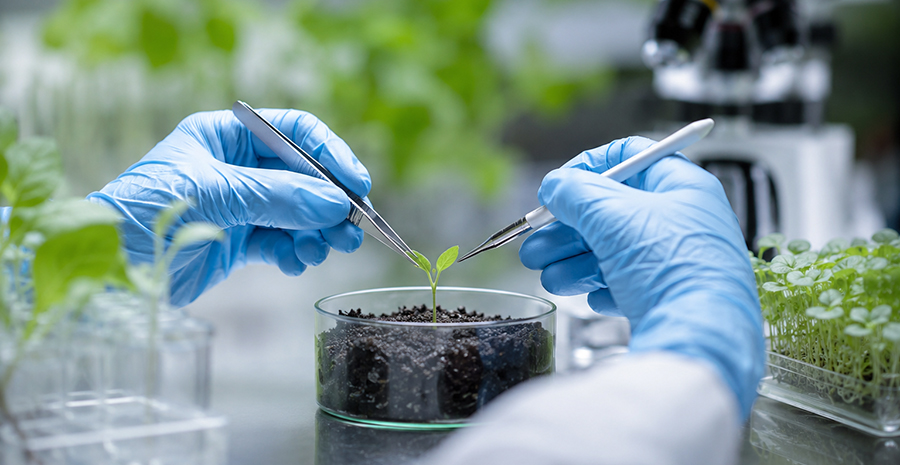
Genome Editing: An Evolution of Plant Breeding Innovation
Genome editing is a scientific advancement that enhances the efficiency of plant breeding. Techniques such as CRISPR-Cas9 enable genetic changes at targeted locations that can be indistinguishable or equivalent from those arising through natural processes or conventional breeding. Importantly, genome editing does not change breeding objectives, but rather improves the capability to achieve long‑standing goals such as increased productivity, resilience to climate stress, improved nutritional quality, and reduced environmental impact.
Genome edited plants present risk profiles comparable to conventionally bred varieties, which is supported by a growing body of scientific and regulatory opinions (e.g., European, UK Biotechnology and Biological Sciences Research Council, European Commission). As such, they warrant science‑based, proportionate regulatory oversight focused on product characteristics rather than the breeding methods used in the development.
Latin America has strong public agricultural research systems, including national institutes and universities, which play a central role in developing locally adapted innovations. Genome editing offers an opportunity to strengthen these capabilities and accelerate the development of regionally driven solutions. In addition, genome editing is increasingly complemented by advances in digital agriculture, including AI-assisted breeding, data analytics, and precision farming, thereby enabling faster, more efficient innovation cycles.
A Growing International Consensus on Regulation
A growing international alignment consistent with WTO principles supports a product‑based approach to the regulation of genome‑edited plants. Leading global and regional organizations—including CropLife International, the International Seed Federation, CropLife Canada, CropLife Europe, and the American Seed Trade Association—consistently emphasize that:
- Like products should be regulated alike, regardless of the technique used;
- Regulatory systems should be risk‑based;
- Where plants are indistinguishable from those derived through conventional breeding, they should be regulated as conventional bred plants and detection, traceability, or labeling requirements should not be imposed.
While regulatory approaches still differ across jurisdictions, many countries are modernizing frameworks to enable proportionate oversight for genome-edited plants, supporting innovation while maintaining high standards of food, feed, and environmental safety.
Several countries in Latin America, including Argentina, Brazil, Honduras, Costa Rica, Guatemala, Ecuador, Paraguay, Peru, Chile, and Colombia, have adopted or advanced regulatory approaches, guidelines, or consultation mechanisms aligned with these principles,[1],[2][3] Argentina was the first country to adopt such an approach. Brazil, through CTNBio Normative Resolution No. 16, applies a case-by-case, product-focused assessment to genome-edited products, an approach actively supported by CropLife Brasil. These systems demonstrate that enabling innovation can coexist with robust biosafety, food safety, and environmental protection.
Latin America plays a critical role in global agricultural trade and global food security. As more countries adopt genome-editing technologies, regulatory divergence in importing countries could create unnecessary trade disruptions, uncertainty for producers, and barriers to innovation, which lead to delays in the adoption of more sustainable solutions.
Promoting greater regional and international regulatory alignment is therefore essential to:
- Facilitate agricultural trade;
- Provide predictability for innovation and investment;
- Reduce unnecessary regulatory burdens;
- Strengthen competitiveness across agricultural value chains.
Science-based and internationally aligned regulatory approaches can help ensure that innovation moves efficiently through regional and global markets while maintaining high standards of safety and environmental protection.
Relevance and Benefits for Latin America
Latin America is a cornerstone of global food production and agricultural exports. Genome editing offers particular value to the region by enabling innovation in crops and traits directly relevant to local agro‑ecological conditions and market needs, including:
- Enhanced drought and heat tolerance for climate adaptation related to water and carbon efficiency.
- Land use, higher yields, lower costs, and better margins are key for smallholder farmers.
- Resistance to regionally significant pests and diseases improves efficiency
- Improved nutritional profiles and food quality, particularly for tropical crops and value-added products
- Reduced post‑harvest deterioration and food losses, lowering volatility
- Better adaptation and efficiency of locally important crops to changing environmental conditions
Genome editing can accelerate improvements in crops important to the region (e.g., maize, soybean, wheat, rice, sugarcane, beans, potato, cassava, and diverse fruits and vegetables). By increasing productivity per hectare, genome editing can contribute to land-use efficiency, helping reduce pressure on deforestation, water use, and the overall environmental footprint. Also, access to better crops improves farmers' profitability through cost reductions, higher yields, and products with additional high-value traits. International experience illustrates these benefits through tangible products such as high-oleic soybean oil, high-GABA tomatoes, non-browning fruits, leafy greens for fresh salads, and disease-resistant tropical crops. Regulatory alignment across trading partners is essential to ensure that these innovations can move smoothly through regional and global value chains without creating trade disruptions.
Key Policy Principles for Latin America
CropLife Latin America advocates for policy frameworks that:
- Are science based and risk proportionate, focusing on product characteristics and using the absence of foreign DNA criterion to enable regulatory status determination
- Apply non‑discrimination, ensuring equal treatment of like products
- Are future‑proof and adaptable to scientific progress
- Promote regional and global regulatory alignment to facilitate trade
- Combine market‑access regulation with robust intellectual property frameworks to sustain innovation
- Support innovation, sustainability, and agricultural competitiveness
- Encourage public-private collaboration and enable innovation ecosystems
Conclusion
Genome Editing is an essential tool for advancing sustainable agriculture, food security, climate resilience, and economic development in Latin America and globally, resulting in products comparable to those of conventional breeding. Enabling policies can strengthen regional scientific capacity and support Latin America’s ability to develop locally adapted agricultural innovations.
For Latin America, the challenge is not whether innovation will advance — it is whether the region will have the enabling policy environments needed to fully benefit from it. By adopting science-based, proportionate, and predictable regulatory approaches, policymakers can help ensure that innovation translates into practical solutions for farmers, consumers, food systems, and the environment. Adding value to farming with genome editing tools is key as next generation innovation ecosystems like precision ag, biologicals, climate modeling, IA-assited breeding can benefit or potentiate sustainable farming.
With the right policy frameworks, Latin America can lead globally in delivering sustainable agricultural innovation that benefits farmers, consumers, and the environment. Timely policy decisions will determine whether Latin America captures the benefits of genome editing innovation or imports them from elsewhere.
The opinions expressed in this document represent the position of CropLife Latin America as of the date of publication and are subject to change.
How to cite this document: CropLife Latin America. 2026. “Genome Editing and Plant Breeding Innovation: A Strategic Opportunity for Sustainable Agriculture in Latin America.”
References
CropLife International. Principles on Intellectual Property to Enable Innovation through Genome Editing.CropLife International, 2025. https://croplife.org/wp-content/uploads/2025/04/CropLife-International-IP-Principles-on-Genome-Edited-Products.pdf
CropLife Canada. Advocating for a positive domestic regulatory environment. https://croplife.ca/policy-priorities/advocacy
Council for Agricultural Science and Technology (CAST). Applications, Benefits, and Challenges of Genome Edited Crops. CAST Issue Paper No. 74, March 2024. https://cast-science.org/wp-content/uploads/2024/03/CAST_IP74-Gene-Edited-Crops.pdf
International Seed Federation (ISF). Position on Plant Breeding Innovation and Genome Editing. ISF, updated guidance. https://worldseed.org/our-work/plant-breeding/plant-breeding-innovation/
CropLife Europe. Position on New Genomic Techniques and Genome Editing in Agriculture. CropLife Europe policy materials. https://croplifeeurope.eu/wp-content/uploads/2021/09/34071-CropLife-Europe-Position-Paper-on-New-Genomic-Techniques.pdf
American Seed Trade Association (ASTA). Policy Statements on Genome Editing and Plant Breeding Innovation.ASTA. https://betterseed.org/policy/biotechnology/
CropLife Brasil. Biotecnología. CropLife Brasil. https://croplifebrasil.org/biotecnologia/
[1] Hernández-Soto, A., Gatica-Arias, A. Genome editing in Latin America: research achievements and regulatory evolution. Plant Cell Tiss Organ Cult 159, 55 (2024). https://doi.org/10.1007/s11240-024-02904-4
[2] Fernández Ríos D, Quintana SA, Gómez Paniagua P, Arrúa AA, Brozón GR, Bertoni Hicar MS, Castro Alegría A and Goberna MF (2025) Regulatory challenges and global trade implications of genome editing in agriculture. Front. Bioeng. Biotechnol. 13:1609110. doi: 10.3389/fbioe.2025.1609110
[3] International Seed Federation (ISF).2024. A call for policy action to foster plant breedind innovation. https://worldseed.org/wp-content/uploads/2024/11/ISF_PBI_9thDec24.pdf